





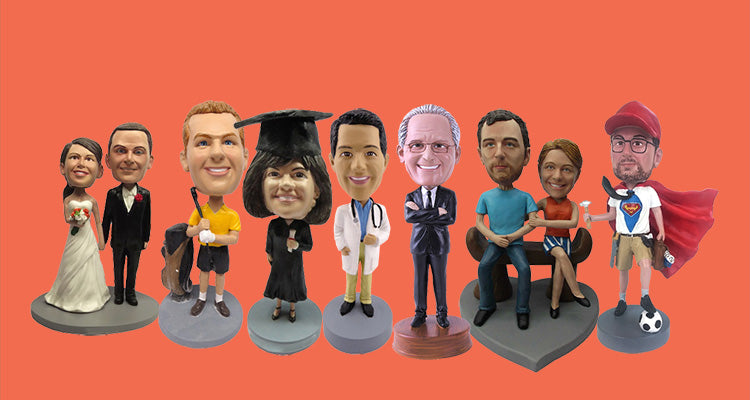


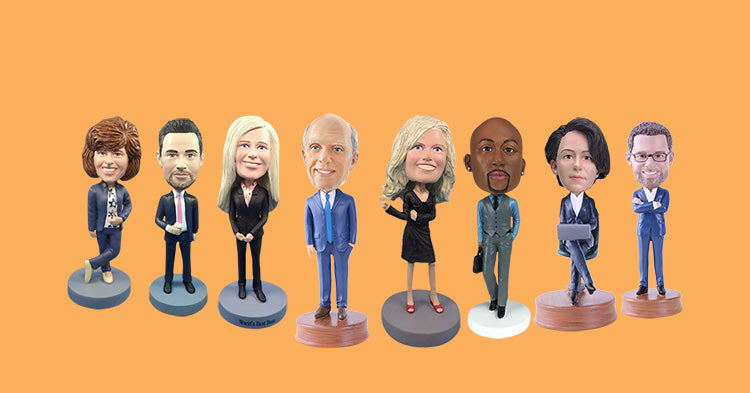

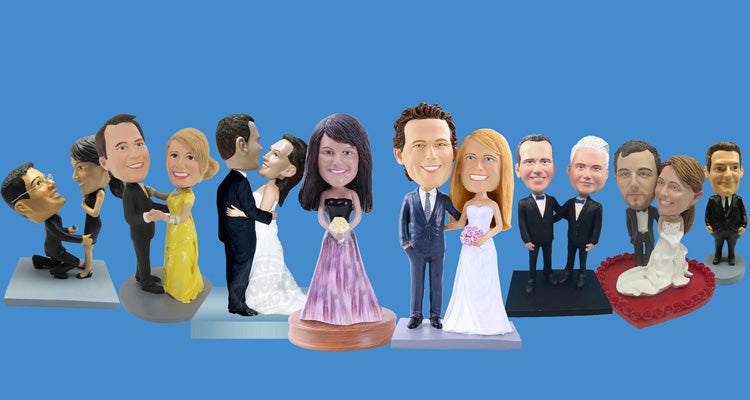

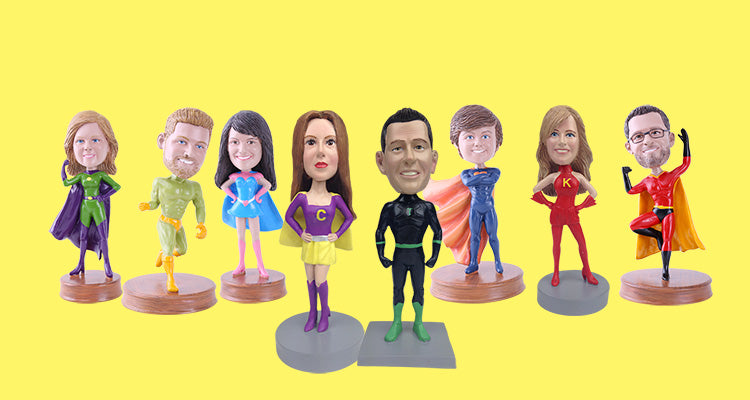

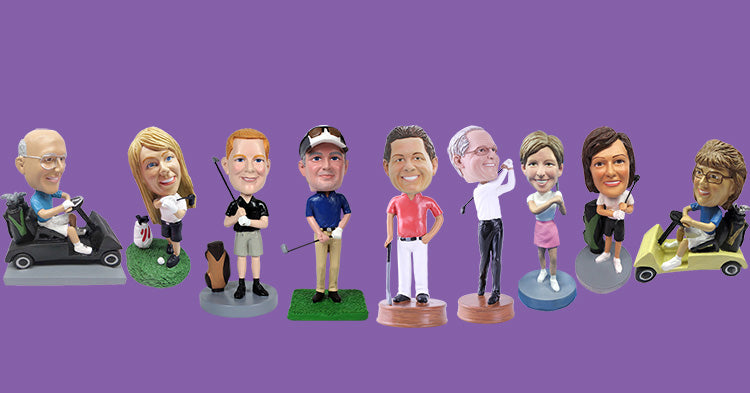


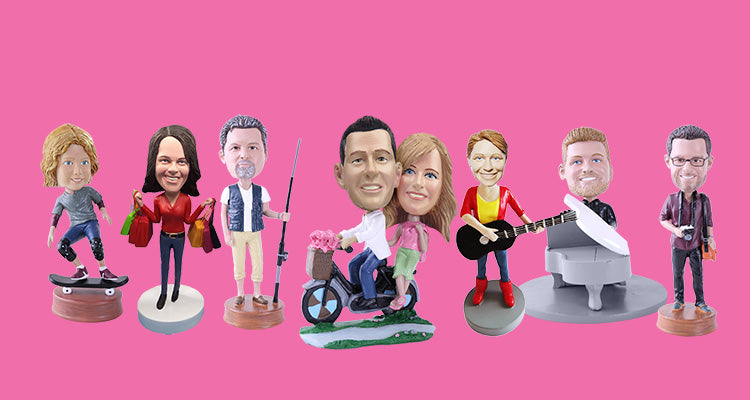

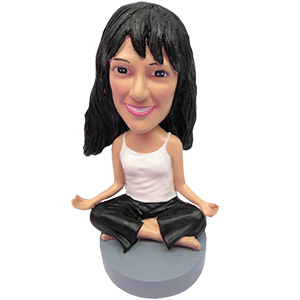

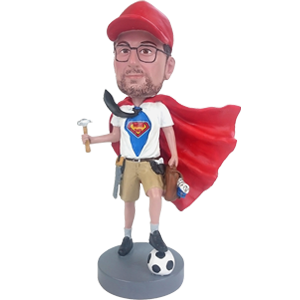

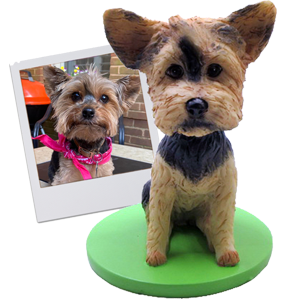

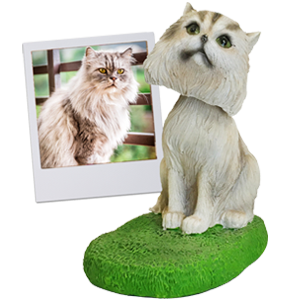

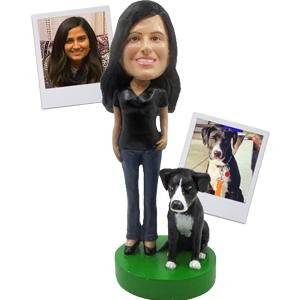

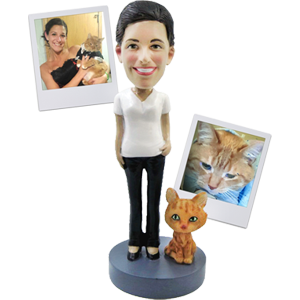


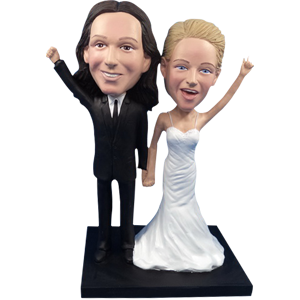


Creating a bobblehead is about finding the perfect mix of realistic details and playful exaggeration. Artists focus on making the face recognizable while keeping the body simplified and whimsical. The process involves careful sculpting, precise painting, and assembling a functional bobble mechanism. Here's how it works:
- Face Details: Features like eye shape, jawline, and skin tone are crafted to match the subject.
- Exaggeration: Oversized heads (1:3 or 1:4 ratio) and playful expressions keep the charm intact.
- Materials: Polymer clay and resin are used for durability and fine details.
- Painting: Acrylic paints and airbrushing bring lifelike colors and shading.
- Proofing: Customers review and request tweaks to ensure likeness before finalizing.
Creating a custom bobblehead is a detailed process that blends artistry and craftsmanship to turn someone's likeness into a fun keepsake.
HOW TO MAKE A BOBBLE HEAD TUTORIAL
Materials and Tools for Realistic Bobblehead Sculpting
Creating a realistic bobblehead requires the right combination of materials and tools to strike a balance between lifelike details and the whimsical charm of an oversized, wobbling head.
Common Materials: Polymer Clay and Resin
For sculpting, artists often rely on polymer clay for its flexibility and detail-friendly nature. This material stays soft at room temperature, making it perfect for fine-tuning intricate features like wrinkles, eye contours, and hair textures. Once the sculpt is complete, it’s baked in a standard oven at approximately 275°F for 30 minutes per 1/4 inch of thickness. The result is a strong, sandable surface that preserves every subtle detail essential for a recognizable likeness.
After the clay sculpt is approved, it’s molded in silicone and cast in resin. Resin captures even the tiniest details - think pores, fabric folds, or individual hair strands - ensuring the finished piece retains the realism of the original design. Once cured, resin becomes lightweight, durable, and impact-resistant, making it ideal for bobbleheads. Its rigidity allows it to support the oversized head on a spring without bending or breaking during transit. Additionally, resin takes primer and paint beautifully, allowing for smooth skin tones and crisp details that stand the test of time.
To strengthen the structure and secure the bobble mechanism, artists use wire armatures, aluminum foil cores, and epoxy or hot glue. Before painting, a primer designed for resin or polymer surfaces ensures better paint adhesion and protects against chipping. Finally, a clear acrylic or polyurethane sealer - available in glossy or matte finishes - safeguards the hand-painted details from scratches, UV damage, and dust.
Tools Artists Use
Once the sculpt and cast are ready, artists turn to specialized tools for refining and detailing. Tools like loop tools, sculpting knives, and dental-style picks help carve eye sockets, define jawlines, and add texture to hair or fabric. Before baking, isopropyl alcohol is used to clean the clay and remove any fingerprints. Some studios even condition their clay using a pasta maker to ensure it’s evenly soft and pliable before sculpting.
Painting the bobblehead requires just as much precision. Artists use fine-tipped synthetic brushes for intricate details such as irises, eyelashes, and eyebrows, while flat brushes are ideal for applying smooth base coats to skin and clothing. An airbrush is often employed for adding soft blush to cheeks, subtle shadows around the nose, or smooth gradients on clothing, achieving a polished look without visible brush strokes.
For colors, acrylic paints are the go-to choice. They adhere well to cured polymer clay and primed resin, dry quickly, and layer effectively. Rather than relying on a single "flesh" tone, artists mix custom shades by blending various acrylics to match customer-provided photos more accurately. Studios like AllBobbleheads.com maintain organized workstations equipped with brush sets, airbrush tools, and detailed color formulas for skin, eyes, and hair. This setup allows multiple artists to maintain a consistent style while tailoring each piece to the client’s preferences. The combination of precise tools and expert techniques ensures every bobblehead achieves the perfect blend of realism and playful charm.
The Step-by-Step Process of Balancing Realism
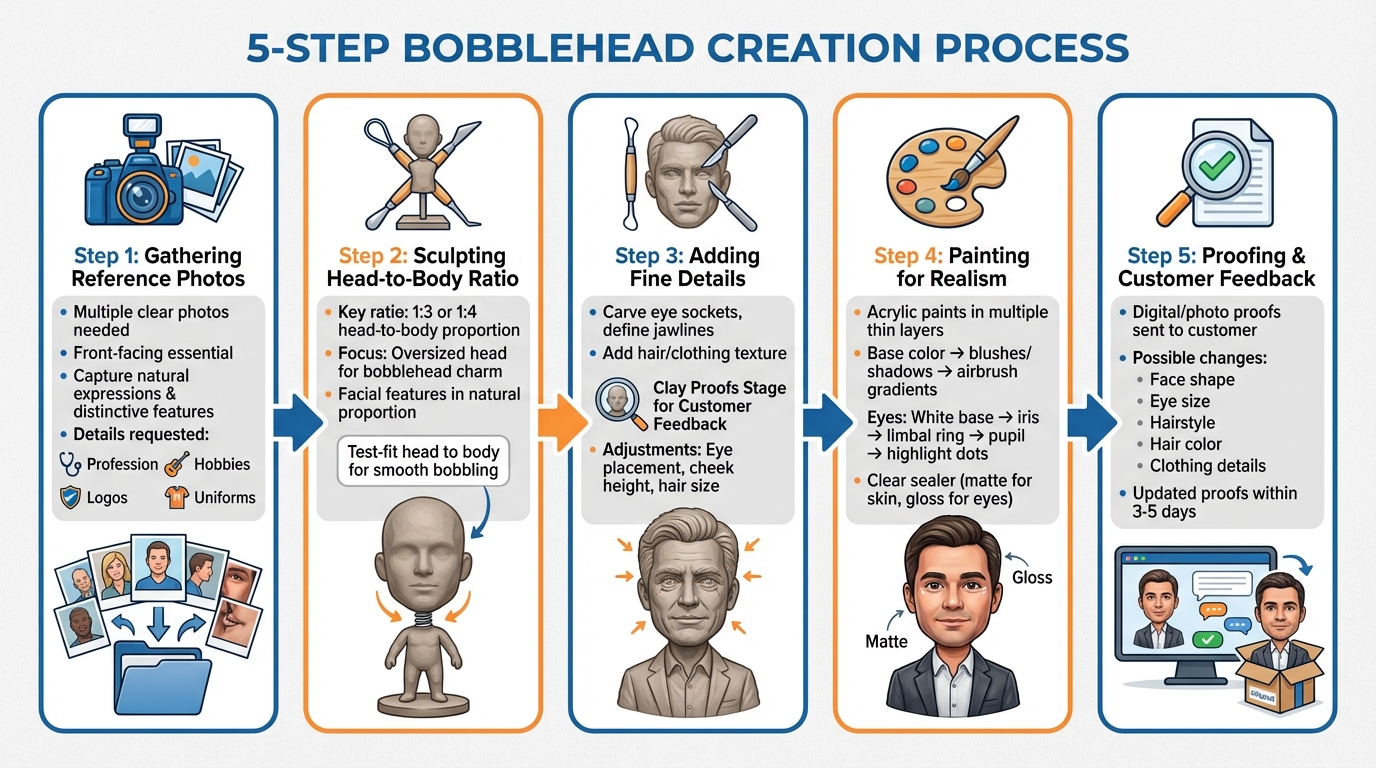
5-Step Bobblehead Sculpting Process: From Photos to Finished Product
Step 1: Gathering Reference Photos and Planning the Design
The first step for artists is collecting multiple reference photos of the person. These images need to be clear, well-lit, and recent to accurately capture details like facial structure, skin tone, and hair texture. A front-facing photo is especially important to ensure proportions are correct. Artists also ask for photos showing the subject's natural expressions - whether they usually smile or have a neutral look - as well as images highlighting distinctive features like dimples, glasses, facial hair, or tattoos. For clothing and pose planning, full-body photos and details about the individual's profession, hobbies, or favorite team are helpful, along with images of logos or uniforms if needed.
Once they have the references, artists create a concept design, either as a sketch or digital mock-up. This design outlines the head size, body pose, clothing, and props. At this stage, they decide which features must stay realistic for recognition - like the eye shape, nose, and jawline - and which can be exaggerated, such as hairstyle volume or body proportions. Artists often confirm details with the customer, such as jersey numbers, suit colors, or hairstyle length, to minimize revisions later and set clear expectations for the final balance of realism and caricature.
Step 2: Sculpting the Head-to-Body Ratio
With the design in place, artists move on to shaping the form. A classic bobblehead is known for its oversized head, typically using proportions of 1:3 or 1:4 of the total body height to keep the playful aesthetic. They begin by sculpting the basic body form and then create a separate head, ensuring it’s large enough to wobble freely on a spring without interference. Despite the exaggerated head size, facial features are carefully kept in proportion - eyes are aligned naturally, the nose width matches the reference, and the jawline and hairline reflect the subject's actual structure.
The head is test-fitted to the body, with adjustments made to the neck and shoulders to ensure smooth bobbling while maintaining a natural silhouette. Striking the right balance here is key: a head that's too small loses the bobblehead charm, while an overly large head can make the face less recognizable.
Step 3: Adding Fine Details by Hand
Once the proportions are set, artists focus on the finer details. Using tools like loop tools, sculpting knives, and dental-style picks, they carve out eye sockets, define jawlines, and add textures to hair and clothing. They work meticulously, constantly referring to the reference photos to capture subtle details like the curve of a smile, the arch of an eyebrow, or the way hair falls naturally across the forehead.
During the Clay Proofs stage, customers review the sculpted form and provide feedback. This step allows adjustments to features like eye placement, cheek height, or hair size, ensuring the sculpture closely resembles the individual before moving on to the painting phase.
Step 4: Painting for Realism
Painting brings the sculpture to life. Artists use acrylic paints, layering multiple thin coats to build depth and avoid a flat look. They start with a base color and then add subtle blushes and shadows, using small brushes and airbrushes to create smooth gradients on areas like the cheeks, nose, and chin. The eyes are painted with intricate care, layering a white base, iris color, a darker limbal ring, the pupil, and tiny highlight dots to give them a natural shine. Clothing and accessories are painted with bold, high-contrast colors to make logos, numbers, or jewelry stand out.
To maintain the bobblehead's fun aesthetic, artists use slightly cleaner and more vibrant colors than those found in hyper-realistic portraits. Shading is simplified into clear light and shadow areas, making the details pop at a small scale. Once the painting is complete, a clear sealer or varnish is applied - matte for skin and fabric, and gloss for eyes or polished shoes - to protect the finish from handling and UV exposure. After this, the piece is prepared for a final review using digital proofs.
Step 5: Proofing and Customer Feedback
Once the sculpture is fully painted, artists send digital or photo proofs to the customer for review before applying the final sealant. Customers can request changes to details like face shape, eye size, hairstyle, hair color, or clothing features. For example, they might ask for a thinner jawline, darker hair, or adjustments to a team logo’s placement. These final revisions typically focus on details that impact the likeness, while the head size and body proportions remain within standard bobblehead norms to ensure proper bobbling.
Services like AllBobbleheads include this review step to ensure the final product is both an accurate representation of the individual and unmistakably a bobblehead. Artists aim to incorporate feedback and provide updated proofs within 3–5 days, ensuring the figure maintains the playful charm and precise details established in the initial design.
sbb-itb-c56fd50
Common Challenges in Balancing Realism and Style
Challenge: Achieving a Recognizable Likeness
One of the biggest hurdles in crafting a bobblehead is capturing a likeness that feels true to the person while working with its quirky, oversized head. The exaggerated proportions can easily distort or oversimplify facial features, making the final product look generic. To tackle this, artists rely on an iterative proofing process, where clients give detailed feedback on feature placement and adjustments. Additionally, features like eyes, skin tone, eyebrows, and hair are meticulously hand-painted to bring the figure to life. This careful attention to detail ensures the final bobblehead reflects the subject’s personality and appearance while paving the way to handle other challenges like durability and functionality.
Challenge: Maintaining Durability Without Losing Detail
Striking a balance between intricate details and overall sturdiness is another tricky aspect of bobblehead creation. Delicate features like fine wrinkles or strands of hair can get lost or weakened during the molding and casting stages. To address this, artists enhance these details during the sculpting phase and adapt fragile elements into sturdier forms, such as thickening hair strands or simplifying hand shapes. Paintwork is then used to hint at finer details. Materials like resin and polymer clay are popular choices because they capture small details while remaining durable enough to handle the movement of a bobbling head. Once durability is secured, the focus shifts to integrating the bobble mechanism.
Challenge: Integrating the Bobble Mechanism
After nailing the likeness and ensuring durability, the final challenge is making the bobble mechanism work seamlessly without compromising the design. The spring or joint that allows the head to wobble needs enough space to move freely but must remain hidden by features like hair or clothing. Artists carefully remove excess material around the neck to create the necessary clearance, securely attach the spring, and then conceal it with creative details. Proper alignment is key - if the spring, cavity, or post isn’t centered and firmly attached, the head could wobble awkwardly, lean to one side, or even detach entirely. Precision in this step ensures the bobblehead functions smoothly while maintaining its polished look.
Conclusion: The Art of Balancing Realism in Bobbleheads
Creating a custom bobblehead is a delicate dance between realism and whimsy. Artists must strike a fine balance - capturing a person’s likeness while embracing the playful, exaggerated proportions that make these figurines so endearing. Every step, from analyzing reference photos and sculpting facial features to mixing just the right skin tones and assembling the spring mechanism, requires both technical expertise and artistic finesse.
The final product is as much a feat of engineering as it is a work of art. Each bobblehead goes through multiple stages, with careful attention to detail at every turn. Artists select materials that highlight intricate features while ensuring durability for long-term display. They solve practical challenges, like reinforcing fragile parts, designing proper spring clearances, and ensuring the head bobs freely without damage.
Studios like AllBobbleheads bring this craftsmanship to life, creating personalized bobbleheads for everything from weddings and sports events to corporate gifts and pet tributes. Each piece is thoughtfully designed to reflect not just the subject’s appearance but also their personality, blending fun with a touch of respect.
A well-made bobblehead is more than just a figurine - it’s a labor of love, infused with hours of careful work to transform a simple concept into a meaningful keepsake. The next time you see or order a custom bobblehead, take a moment to appreciate the skill and care that goes into crafting these one-of-a-kind treasures. They’re not just novelty items - they’re personal, handcrafted mementos that capture the essence of a person in a playful, unforgettable way.
FAQs
How do artists make sure a bobblehead looks like the person it's based on?
Creating a bobblehead that truly resembles a person involves a meticulous proofing process. Artists share clay and paint proofs with customers, giving them the chance to review and tweak details like facial features, hairstyles, and clothing. This back-and-forth collaboration results in a one-of-a-kind, handcrafted piece that captures both the look and personality of the individual.
What are the best materials for making high-quality, long-lasting bobbleheads?
The finest bobbleheads are made from high-quality polymer clays or resins, materials prized for their durability and precision in capturing intricate details. This combination of strength and flexibility makes them perfect for creating lifelike features while standing up to regular handling.
These materials give artists the freedom to craft detailed designs, ensuring your custom bobblehead is not only visually impressive but also long-lasting.
How do artists decide which features to emphasize when sculpting a bobblehead?
Artists put a lot of thought into deciding which features to accentuate, focusing on the traits that make a subject instantly identifiable. This might mean emphasizing a particular facial expression, a unique hairstyle, or other defining characteristics. The trick is finding the sweet spot between playful exaggeration and just enough realism to preserve the subject’s likeness.
By honing in on standout details - like a trademark smile or iconic glasses - artists create bobbleheads that not only capture the subject’s personality but also showcase a touch of creativity, all while staying true to who they are.
Related Blog Posts
- Ultimate Guide to Personalized Bobblehead Gifts
- Custom Bobbleheads: Common Questions Answered
- Bad Photo Quality? How to Get Perfect Results
- How Artists Add Fine Details to Bobbleheads


